Bloomer Polka and Bloomer Waltz
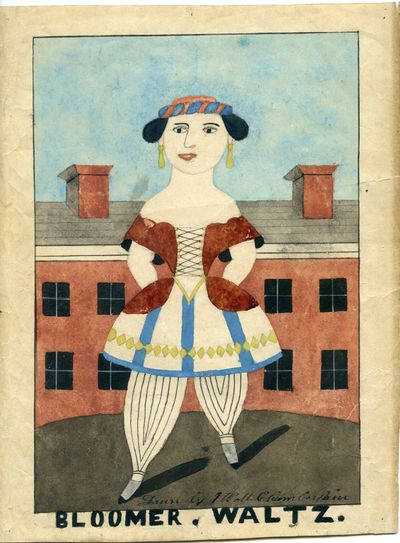
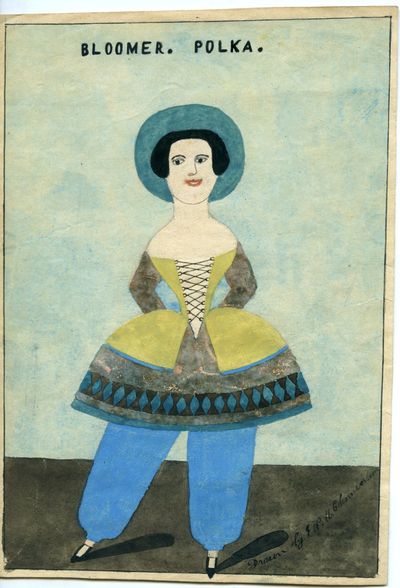
Most likely, both images were inspired by the title pages for popular music scores popular in the 1850s, showing young ladies in a daring fashionable dress of the day. Full pantaloons under a knee-length skirt characterized the Bloomer outfit, introduced in 1851, and gained prominence as a symbol for the women’s rights movement. It was named after Amelia Jenks Bloomer who, at the age of 22, married the lawyer Dexter Bloomer, a Quaker with progressive views who encouraged Amelia to write for his newspaper, the Seneca Falls County Courier. Over the next few years she wrote articles in favour of prohibition and women’s rights.
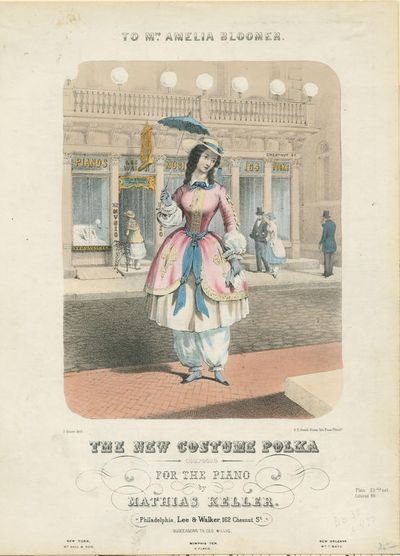
Promoted with cover images of women wearing the revolutionary outfit, instrumental pieces like“Bloomer Waltz” and “Bloomer Polka” became associated with the Bloomer costume and its associated message of female empowerment, thus sparking controversy at the time.